Investor Memorandum
For the Automated Real Estate Investor
The Music Union 512 · Chapter 512 · Austin, Texas · musicunion.co · Confidential — March 2026
This memo is written for a specific investor: the person who already owns automated real estate — self-storage, car washes, laundromats — and understands why passive, recurring, low-touch revenue from physical assets is the best risk-adjusted return in private real estate. The Music Union 512 operates on the same mechanics. It just does it better.
Why This Memo Exists
If you own self-storage, you already understand the thesis: low-touch physical assets, recurring revenue, minimal staffing, high margin, and a customer who pays monthly for space they rarely visit. You understand that the best real estate investments are not about the building — they are about the revenue model the building enables.
The Music Union 512 operates on the same structural mechanics — hourly and monthly recurring revenue from small, independently operated units — but with three advantages self-storage, car washes, and laundromats do not have: brand premium, community lock-in, and national scalability under a single identity.
The Structural Comparison
Every automated real estate asset shares the same DNA: subdivide a building into small, independently revenue-generating units. Minimize labor. Maximize utilization. Let the customer serve themselves. The Music Union 512 follows the same playbook — but the units are rehearsal rooms, recording studios, podcast suites, and coworking offices instead of storage bays and wash bays.
| Metric | Self-Storage | Car Wash | Laundromat | Music Union 512 |
|---|---|---|---|---|
| Revenue Model | Monthly rent per unit | Per-wash fee + memberships | Per-load coin/card | Hourly booking + monthly membership |
| Avg Revenue/SF | $8–$15/SF/yr | $150–$300/SF/yr | $30–$60/SF/yr | $65–$95/SF/yr (blended) |
| Typical NOI Margin | 55–65% | 35–50% | 25–40% | 55–72% (stabilized) |
| Staffing Model | 1–2 FTE per facility | 0–2 FTE per tunnel | 0–1 FTE per location | 3–5 FTE + contractors |
| Pricing Power | Low — commodity | Low–Medium | Very Low | High — themed, branded, scarce |
| Customer Switching Cost | Low — price-driven | Very Low | Very Low | High — community, identity, card |
| Brand Value | Minimal | Regional at best | None | National institution potential |
| Cap Rate (Stabilized) | 5.5–7.5% | 6.0–8.0% | 7.0–9.0% | 6.5–7.5% (conservative) |
Why Music Union Outperforms
1. Brand Premium
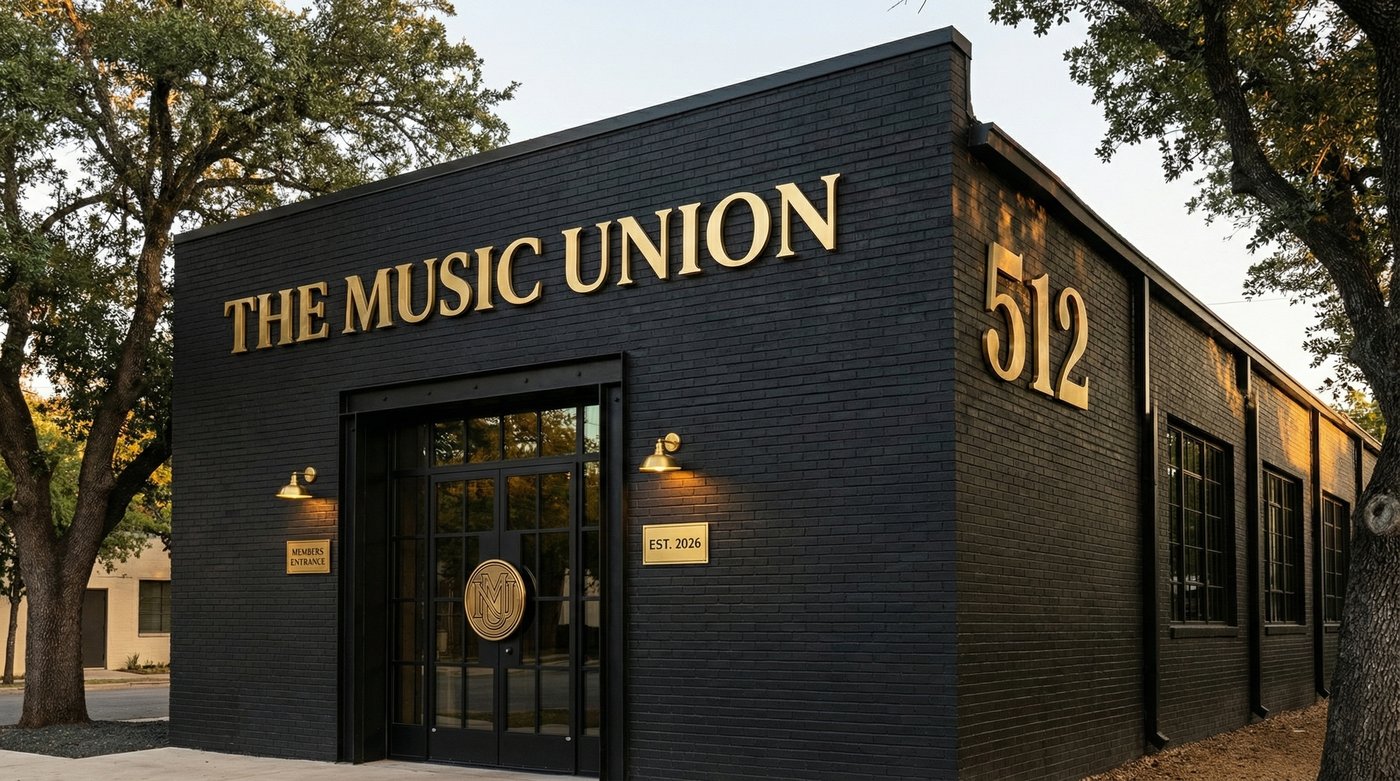
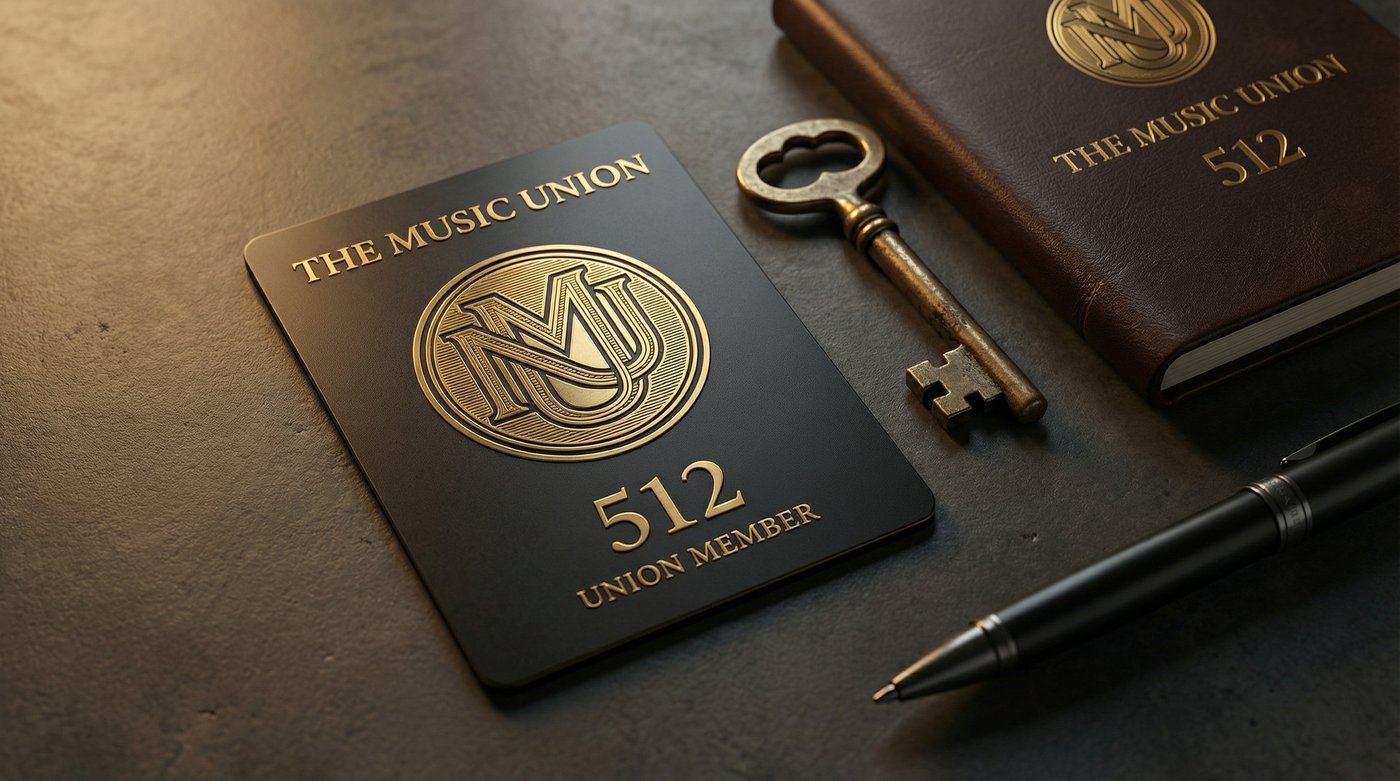
No one wears a Public Storage hat. No one tattoos a car wash logo. The Music Union 512 is named after Austin's area code — a civic identity marker that musicians already wear, display, and identify with. The Union Card is a physical metal card carried in wallets and worn on lanyards. The brand creates pricing power that commodity real estate cannot access.
2. Community Lock-In
A storage customer leaves for $5/month less. A Music Union member stays because their band rehearses in The Dungeon every Tuesday, their producer works out of Suite 3, their manager has an office on The Floor, and their name is on a locker in Zone G. The switching cost is not financial — it is social, professional, and identity-based.

3. Revenue Density
A 10×12 storage unit generates $100–$200/month. A 250 SF rehearsal room at Music Union 512 generates $2,000–$4,000/month at 50–70% utilization. A 400 SF recording studio generates $4,000–$8,000/month. The revenue per square foot is 4–8× higher than self-storage, with comparable operating margins.
4. National Scalability
Self-storage scales by adding locations. Each location is independent — no cross-facility membership, no brand loyalty, no network effect. The Music Union scales by adding chapters. Each chapter shares a membership system, a touring network, a content platform, and a national brand. A member in Austin can book a rehearsal room in Nashville. A Founding Partner's reserved table exists at every chapter. The network effect compounds with every new city.
Austin — Chapter Exterior
The Automation Stack
The Music Union 512 is designed to operate with the same low-touch efficiency as a self-storage facility. The difference is that the automation is software-native, not hardware-native.
| Function | Self-Storage Equivalent | Music Union Implementation |
|---|---|---|
| Access Control | Keypad gate code | Union Card NFC tap — zone-level permissions |
| Booking | Online unit reservation | Real-time hourly booking via app/web |
| Pricing | Revenue management software | Dynamic pricing engine (demand, time-of-day, tier) |
| Payment | Auto-pay monthly | Auto-charge per booking + monthly membership |
| Monitoring | Security cameras + motion | Occupancy sensors + noise monitoring per room |
| Staffing | 1 manager per 500 units | 1 GM + 2–3 FTE for 44,528 SF campus |
| Customer Service | Call center / kiosk | In-app support + dedicated contact for top tiers |
The OBBBA Tax Advantage
The One Big Beautiful Bill Act (OBBBA), signed July 4, 2025, permanently restored 100% first-year bonus depreciation on qualifying assets placed in service after January 19, 2025. The Music Union 512's "Every Surface Is a Set" design philosophy means that a significantly larger share of the buildout qualifies as personal property — not structural — and is eligible for immediate Year 1 write-off.
| Depreciation Category | Standard CRE | Music Union 512 (ESAS) | Difference |
|---|---|---|---|
| Personal Property (100% Y1) | $1.5M–$2.0M | $2.5M–$3.5M | +$1.0M–$1.5M |
| QIP (100% Y1 under OBBBA) | $1.0M–$1.5M | $1.3M–$1.7M | +$0.3M–$0.2M |
| Total Y1 Eligible Deductions | $2.5M–$3.5M | $3.8M–$5.2M | +$1.3M–$1.7M |
| Y1 Interest Expense Deduction | $0 (all-cash) | ~$632,823 | +$632,823 |
| Total Y1 K-1 Deductions (leveraged) | $3.1M–$4.1M | $4.4M–$5.8M | +$1.3M–$1.7M |
| Collective Tax Savings (37%) | $1.1M–$1.5M | $1.6M–$2.1M | +$0.5M–$0.6M |
For a $1M Founding Partner investment: estimated Year 1 K-1 deductions of $800K+ and tax savings of ~$296K+ at the 37% federal bracket. Texas has no state income tax.
Financial Summary
| Metric | Y1 (2027) | Y3 (2029) | Y5 (2031) | Y7 (2033) |
|---|---|---|---|---|
| Total Revenue | $2,258K | $4,350K | $4,897K | $5,400K |
| Operating Expenses | ($1,020K) | ($1,175K) | ($1,242K) | ($1,384K) |
| Net Operating Income | $1,215K | $3,133K | $3,593K | $3,938K |
| Debt Service | ($753K) | ($753K) | ($753K) | ($753K) |
| Net Cash Flow to Equity | $462K | $2,380K | $2,840K | $3,185K |
| Cash-on-Cash Return | 10.1% | 52.0% | 62.1% | 69.6% |
Exit Scenarios (Year 7)
| Scenario | Worst Case | Base Case | Best Case |
|---|---|---|---|
| NOI Year 7 | $1,887K | $3,902K | $6,160K |
| Implied Asset Value | ~$21.5M | ~$58.6M | ~$107M |
| Leveraged Equity Multiple | 6.2× | 14.7× | 24.4× |
The Bottom Line
You already understand the model. You already own the asset class. The Music Union 512 is the same structural thesis — subdivided space, recurring revenue, low staffing, high margin — executed with brand premium, community lock-in, and national scalability that self-storage, car washes, and laundromats cannot replicate. The question is not whether this model works. The question is whether you want to own the first chapter.
Download the original document for full formatting and offline review.
Download Investor Memorandum (DOCX)